LiDAR 3D Scanning: How It Is Transforming Modern Construction and Engineering
Discover how BIM in construction industry projects improves collaboration, reduces rework, enhances accuracy, and supports smarter project delivery.
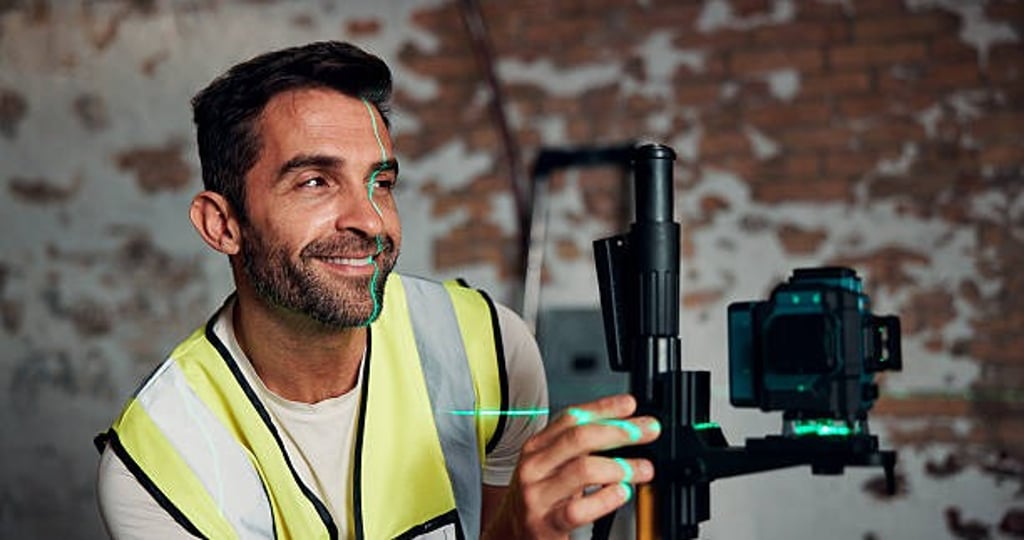
If you've ever been involved in a construction project, you know that accurate information can make or break a job. A single measurement error, an outdated site drawing, or an overlooked detail can lead to delays, budget overruns, and frustrating rework.
The problem is that traditional measurement methods don't always capture the full picture. Construction sites are complex environments, and relying solely on manual measurements can leave room for mistakes. That's where LiDAR 3D scanning comes in.
Over the past few years, LiDAR technology has become one of the most valuable tools in construction, engineering, and architecture. By capturing highly accurate site data in a fraction of the time required by traditional methods, LiDAR scanning is helping project teams work smarter, reduce risk, and improve project outcomes.
As digital construction continues to evolve, LiDAR 3D scanning is quickly becoming an essential part of modern project workflows.
What Is LiDAR 3D Scanning?
LiDAR stands for Light Detection and Ranging. It is a technology that uses laser pulses to measure distances and create highly detailed digital representations of physical environments.
A LiDAR sensor sends out thousands, and often millions, of laser pulses every second. These pulses bounce off surfaces and return to the scanner. By measuring the time it takes for the light to travel back, the system calculates precise distances.
The result is a collection of millions of data points known as a point cloud. This point cloud forms a highly accurate digital representation of buildings, structures, landscapes, and infrastructure.
Think of it as creating a digital copy of the real world. Instead of relying on sketches or limited measurements, project teams can work with an accurate virtual representation of existing conditions.
Why Accuracy Matters in Construction
Construction projects depend on accurate information from the very beginning. Every decision, from design and planning to fabrication and installation, relies on reliable site data.
When measurements are inaccurate, problems quickly start to appear. Structural components may not fit correctly. Mechanical systems may clash with other building elements. Design teams may have to revise plans after discovering unexpected site conditions.
These issues often lead to rework, delays, and increased costs.
LiDAR 3D scanning helps reduce these risks by providing a detailed and accurate understanding of the project environment before major decisions are made. Instead of working from assumptions, teams can work from real-world data.
How LiDAR 3D Scanning Works
The process begins with a 3D LiDAR scanner being positioned throughout a site to capture information from multiple angles. Each scan records millions of measurements that document the surrounding environment.
Once the data is collected, specialized software combines the scans into a complete point cloud model. This model can then be viewed, analyzed, measured, and integrated into other digital workflows.
One of the biggest advantages of LiDAR scanning is speed. Areas that may take days to measure manually can often be captured in a matter of hours while providing significantly more detail.
This efficiency makes LiDAR particularly valuable for large-scale construction and infrastructure projects.
Applications of LiDAR 3D Scanning
LiDAR scanning is used across a wide range of industries, but its impact on construction and engineering has been especially significant.
Common applications include:
Existing condition surveys
Building documentation
Infrastructure projects
Renovation planning
Quality assurance inspections
Facility management
Construction verification
Asset management
By providing accurate site information, LiDAR scanning helps teams make informed decisions throughout the project lifecycle.
Supporting BIM Workflows
The importance of BIM in construction industry projects continues to grow as organizations embrace digital transformation.
BIM models rely on accurate information to be effective. If the underlying data is inaccurate, project teams may encounter issues later in the design or construction process.
LiDAR scanning provides highly accurate reality capture data that can be integrated into BIM workflows. This allows project teams to create digital models that reflect actual site conditions rather than assumptions or outdated drawings.
The result is improved coordination, better clash detection, and more reliable project planning.
Reducing Rework and Improving Efficiency
One of the biggest benefits of LiDAR scanning is its ability to reduce costly rework.
Construction teams often discover problems after installation begins. By that point, fixing the issue may require additional labor, materials, and time.
LiDAR scanning helps identify potential issues much earlier. Accurate site data allows teams to validate designs, verify dimensions, and detect conflicts before construction reaches critical stages. Fixing a problem during planning is almost always less expensive than fixing it on site. This proactive approach helps improve productivity and reduce project risk.
The Future of LiDAR Technology
As construction technology continues to evolve, LiDAR scanning is becoming part of a larger digital ecosystem that includes BIM, digital twins, automation, and advanced project analytics.
These technologies work together to provide greater visibility, improve collaboration, and support smarter decision-making. The future of construction is increasingly data-driven, and LiDAR scanning plays a critical role in making that future possible. Organizations that invest in accurate reality capture today are building stronger foundations for tomorrow's projects.
Conclusion
LiDAR 3D scanning is transforming the way construction, engineering, and architecture professionals capture and use project information. By providing highly accurate digital representations of real-world environments, LiDAR helps teams improve planning, reduce errors, and make better decisions throughout the project lifecycle.
As projects become more complex and digital workflows become more common, the value of accurate site data continues to grow. Whether supporting BIM workflows, reducing rework, or improving project efficiency, LiDAR 3D scanning is proving to be one of the most powerful tools available in modern construction.
FAQs
1. What is LiDAR 3D scanning?
LiDAR 3D scanning uses laser technology to capture accurate measurements and create digital models of physical environments.
2. What does LiDAR stand for?
LiDAR stands for Light Detection and Ranging.
3. How does a LiDAR sensor work?
A LiDAR sensor sends laser pulses and measures the time it takes for them to return after hitting a surface.
4. What is a point cloud?
A point cloud is a collection of millions of measured data points that represent a physical environment.
5. How accurate is LiDAR scanning?
Modern LiDAR systems can achieve highly accurate measurements, often within millimeters.
6. How is LiDAR used in construction?
It is used for surveying, documentation, BIM workflows, quality control, and project planning.
7. Can LiDAR data be used in BIM?
Yes. LiDAR scan data is commonly integrated into BIM models for improved accuracy.
8. Does LiDAR scanning reduce rework?
Yes. Accurate site information helps identify issues before they become costly problems.
+61 407 923 777
steve@scanbuild.com.au
Newcastle | Hunter | Central Coast | Sydney
© 2026 ScanBuild. All Rights Reserved. | Privacy Policy | Terms & Conditions

Peace of Mind.


REACH US